Software comparison

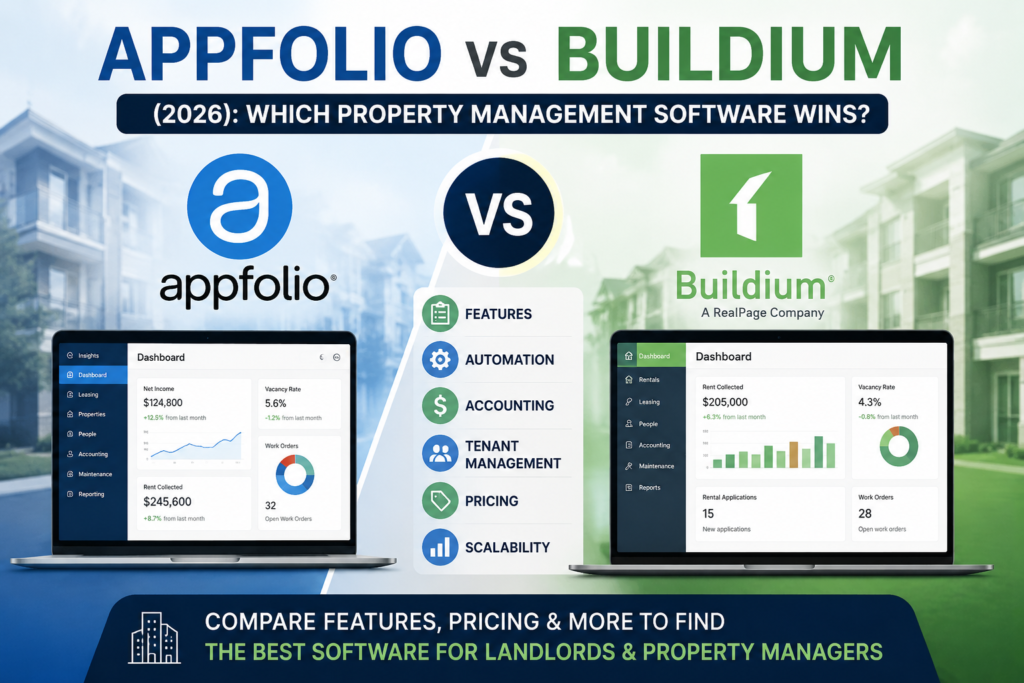
AppFolio vs Buildium property management software comparison showing features, pricing, automation, accounting, tenant management, and scalability in 2026.
Software comparison

AppFolio vs Buildium

AppFolio vs Buildium: Which Property Management Software Is Better in 2026? Choosing the right property management software can significantly impact the efficiency and profitability of your real estate business. With increasing demand for automation, online rent collection, tenant communication, and financial reporting, property managers across the United States are looking for platforms that simplify operations while supporting growth. Two of the most popular solutions on the market are AppFolio and Buildium. Both platforms offer powerful tools for landlords, property managers, and real estate investors, but each serves different business needs. In this comprehensive AppFolio vs Buildium comparison, we’ll examine features, pricing, ease of use, scalability, and overall value to help you determine which property management software is best for your business in 2026. What Is AppFolio? AppFolio is a cloud-based property management software designed primarily for growing and large-scale property management companies. It offers advanced automation, AI-powered workflows, online leasing, accounting tools, maintenance management, and marketing solutions. AppFolio is known for its modern interface, strong automation capabilities, and ability to handle large property portfolios efficiently. Key AppFolio Features What Is Buildium? Buildium is a property management platform designed for landlords, community associations, and small-to-medium-sized property management companies. The platform focuses on affordability, ease of use, and essential property management tools without overwhelming users with unnecessary complexity. Key Buildium Features AppFolio vs Buildium: Feature Comparison 1. User Experience AppFolio offers a sleek and modern interface with advanced automation features. While powerful, it may require a learning curve for new users. Buildium provides a more straightforward dashboard that’s beginner-friendly and easier to navigate for smaller teams. Winner: Buildium for simplicity, AppFolio for advanced functionality. 2. Accounting and Financial Management Accounting is one of the most important aspects of property management software. AppFolio delivers enterprise-level accounting capabilities, including detailed reporting, automated bookkeeping, and real-time financial insights. Buildium also offers strong accounting tools but focuses more on essential financial management rather than advanced analytics. Winner: AppFolio 3. Tenant and Owner Portals Both platforms provide self-service portals where tenants can: Property owners can review financial reports, occupancy data, and property performance metrics. The experience is excellent on both platforms. Winner: Tie 4. Automation Capabilities Automation is where AppFolio truly stands out. The platform automates leasing communications, maintenance workflows, late fee management, inspections, and many repetitive administrative tasks. Buildium offers automation as well but lacks some of AppFolio’s advanced AI-driven capabilities. Winner: AppFolio 5. Maintenance Management Both systems allow property managers to: AppFolio provides more sophisticated maintenance workflows and vendor management tools. Winner: AppFolio 6. Pricing Pricing is often the deciding factor for many property managers. Buildium is generally considered more affordable and accessible for smaller portfolios. It offers multiple plans designed for businesses at different growth stages. AppFolio typically targets larger property management companies and may require a higher monthly investment. For small landlords and growing businesses, Buildium often provides better initial value. Winner: Buildium AppFolio vs Buildium: Pros and Cons AppFolio Pros AppFolio Cons Buildium Pros Buildium Cons Which Property Management Software Is Best in 2026? The answer depends on the size and goals of your property management business. Choose Buildium if you: Choose AppFolio if you: Final Verdict: AppFolio vs Buildium When comparing AppFolio vs Buildium in 2026, there is no universal winner. Both platforms are among the best property management software solutions available in the United States. Buildium remains an excellent choice for landlords and growing property managers seeking affordability and ease of use. Meanwhile, AppFolio excels for larger organizations that need advanced automation, robust accounting, and scalable operations. If budget and simplicity are your priorities, Buildium is likely the better fit. If growth, automation, and operational efficiency are your main objectives, AppFolio offers greater long-term value. Before making a decision, evaluate your portfolio size, budget, and future growth plans to ensure you select the property management software that aligns with your business goals.
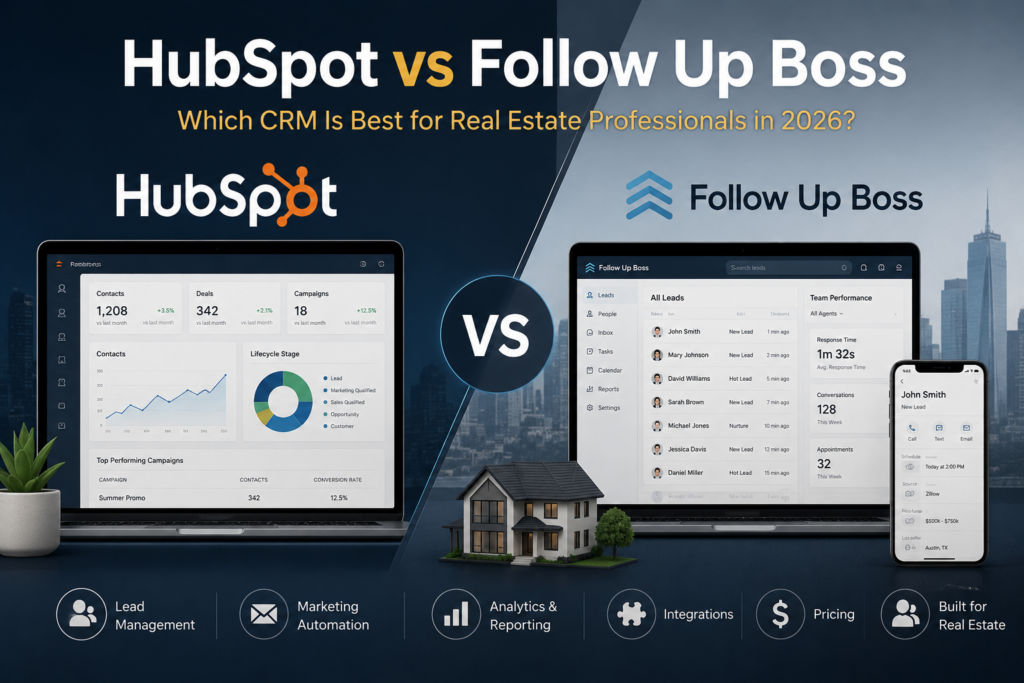
HubSpot vs Follow Up Boss pricing comparison for US real estate teams
Software comparison

HubSpot vs Follow Up Boss (2026)

HubSpot vs Follow Up Boss (2026): Which CRM Is Better for Real Estate Professionals? When choosing a customer relationship management (CRM) platform, one question continues to come up among real estate professionals across the United States: HubSpot vs Follow Up Boss — which one is the better choice? In 2026, CRM tools are no longer optional. Whether you’re an independent realtor, a growing brokerage, or a high-volume real estate team, having the right CRM can directly impact your lead management, sales process, and client relationships. Both HubSpot and Follow Up Boss are powerful platforms, but they serve different needs. In this guide, we’ll compare features, pricing approach, usability, and ideal use cases to help you make the right decision. What Is HubSpot? HubSpot is an all-in-one CRM and marketing platform designed for businesses of all sizes. It offers tools for contact management, email marketing, automation, analytics, sales pipelines, and customer service. Many businesses in the U.S. choose HubSpot because it provides flexibility beyond just lead management. It can support long-term business growth through integrated marketing and sales features. Key HubSpot Features: HubSpot works especially well for businesses looking for a complete ecosystem rather than just a contact database. What Is Follow Up Boss? Follow Up Boss is a CRM built specifically for real estate professionals. Unlike broader CRM systems, it focuses heavily on managing and converting real estate leads. Many agents and brokerages in the United States use Follow Up Boss because it simplifies daily workflows and keeps lead communication organized. Key Follow Up Boss Features: Because it’s designed for real estate, many users find it easier to implement without a long learning curve. HubSpot vs Follow Up Boss: Main Differences 1. Industry Focus One of the biggest differences between HubSpot and Follow Up Boss is the target audience. HubSpot serves multiple industries, including healthcare, SaaS, retail, finance, and real estate. Follow Up Boss was built primarily for real estate agents and brokerages. If your business revolves around property sales and lead nurturing, Follow Up Boss may feel more tailored to your daily operations. 2. Ease of Use HubSpot offers many features, but that can sometimes create complexity for new users. Follow Up Boss focuses on simplicity and practical workflows for agents. For busy U.S. real estate teams that need quick setup and easy adoption, Follow Up Boss often feels more straightforward. 3. Marketing Capabilities HubSpot clearly stands out in marketing functionality. Its tools include: Follow Up Boss focuses more on lead follow-up rather than large-scale marketing efforts. If content marketing and lead generation are major priorities, HubSpot has a stronger advantage. 4. Real Estate Integrations Follow Up Boss was developed with real estate businesses in mind and supports many property-related integrations. Real estate professionals often appreciate the platform’s ability to connect directly with lead sources and simplify management. HubSpot can also integrate with real estate tools, but some configurations may require additional setup. 5. Pricing Considerations Pricing often plays a major role in CRM selection. HubSpot typically offers flexible plans that range from basic features to enterprise-level functionality. Costs may increase as additional features and users are added. Follow Up Boss pricing is generally more focused around real estate teams and agents. Businesses should compare current pricing structures and calculate long-term costs before making a decision. Who Should Choose HubSpot? HubSpot may be the better option if you: Who Should Choose Follow Up Boss? Follow Up Boss may be the better choice if you: Final Verdict: HubSpot vs Follow Up Boss in 2026 The right choice ultimately depends on your business goals. If you want an all-in-one business growth platform with strong marketing capabilities, HubSpot can be a powerful investment. If your focus is real estate lead management and fast follow-up systems, Follow Up Boss may provide a more practical solution. For many U.S. real estate professionals in 2026, Follow Up Boss delivers specialized functionality, while HubSpot offers broader flexibility. Choosing the right CRM today can help improve conversions, increase productivity, and create stronger client relationships tomorrow. Pricing Comparison Pricing often becomes a deciding factor for many businesses. HubSpot offers a free CRM version with basic tools. However, advanced features such as automation and reporting require paid plans, which can become expensive. Follow Up Boss does not offer a permanent free plan, but its pricing structure is designed specifically for real estate professionals and teams. For agents searching for a CRM for real estate teams USA, Follow Up Boss often delivers better value. Winner: Follow Up Boss Final Verdict: HubSpot vs Follow Up Boss In the Follow Up Boss vs HubSpot debate, both platforms provide excellent functionality but target different users. If you need advanced marketing tools, detailed reporting, and scalability, HubSpot CRM for real estate is a strong choice. However, if your goal is better lead management, quicker follow-up, and a CRM designed specifically for real estate professionals, Follow Up Boss is likely the best CRM for real estate agents in 2026. Ultimately, selecting the best real estate CRM software depends on your budget, team size, and business goals.
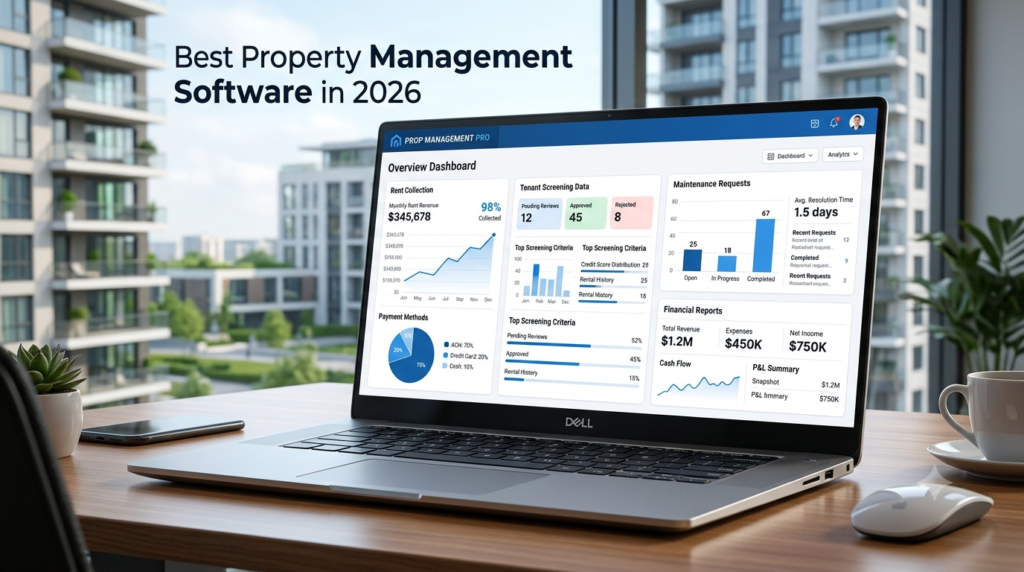
Laptop displaying a property management software dashboard with rent collection, tenant screening, maintenance requests, financial reports, and analytics for real estate management in 2026.
Software comparison

Best Property Management Software in 2026

Managing rental properties efficiently is one of the biggest challenges for landlords and property managers. From collecting rent and tracking leases to handling maintenance requests and communicating with tenants, the workload can quickly become overwhelming. This is why investing in the best property management software has become essential for real estate professionals across the United States. In 2026, property management software helps automate daily tasks, improve tenant experiences, and increase profitability. Whether you own a few rental units or manage a large portfolio, the right software can save time and streamline operations. What Is Property Management Software? Property management software is a digital platform designed to help landlords and property managers manage rental properties more effectively. These solutions typically include features such as online rent collection, tenant screening, lease management, maintenance tracking, accounting, and financial reporting. The best property management software allows users to centralize property operations, reducing manual work while improving efficiency and organization. Top Property Management Software in 2026 1. Buildium Buildium is one of the most trusted property management software platforms in the United States. It offers a complete set of tools for managing residential and association properties. Key Features: Buildium is ideal for growing property management companies looking for a scalable solution. 2. AppFolio Property Manager AppFolio is known for its modern interface and advanced automation features. It is widely used by professional property managers managing medium to large portfolios. Key Features: Its automation capabilities make it a strong choice for businesses seeking operational efficiency. 3. Rent Manager Rent Manager provides flexible property management tools for residential, commercial, and mixed-use properties. Key Features: This platform is particularly useful for experienced property managers who need customization options. 4. TenantCloud TenantCloud is designed for independent landlords and smaller property management businesses. Key Features: Its affordability and simplicity make it a popular option for small rental portfolios. 5. DoorLoop DoorLoop has gained significant popularity due to its user-friendly interface and comprehensive management tools. Key Features: Benefits of Using Property Management Software Streamlined Rent Collection Online payment systems allow tenants to pay rent quickly and securely. This reduces late payments and eliminates the hassle of manual collection. Better Tenant Management Property management software stores tenant information, lease agreements, and communication records in one place, making it easier to manage relationships and resolve issues. Improved Financial Reporting Most platforms provide detailed financial reports that help landlords monitor income, expenses, occupancy rates, and overall performance. Efficient Maintenance Tracking Maintenance requests can be submitted and tracked online, helping property managers respond faster and improve tenant satisfaction. Increased Productivity Automation reduces administrative work, allowing property managers to focus on growing their rental business instead of handling repetitive tasks. How to Choose the Best Property Management Software When selecting a property management solution, consider your portfolio size, budget, and business requirements. Look for software that offers: The right platform should simplify operations while supporting future growth. Why Property Management Software Matters in 2026 The US rental market is becoming increasingly competitive. Tenants expect convenient online services, faster communication, and seamless payment options. Property managers who embrace modern technology can improve tenant retention and operate more efficiently. As automation and cloud-based solutions continue to evolve, property management software is no longer a luxury—it is a necessity for landlords and property management companies looking to stay competitive. Final Thoughts Choosing the best property management software in 2026 can significantly improve the way landlords and property managers operate. Solutions like Buildium, AppFolio, Rent Manager, TenantCloud, and DoorLoop offer powerful features that simplify property management and help maximize rental income. Whether you are a first-time landlord or a professional property manager in the United States, investing in the right property management software can save time, improve tenant satisfaction, and support long-term business growth.

Scroll to Top