Real Estate Tech Stack Guide (2026): Building the Perfect Technology Stack for Success
The real estate industry is becoming increasingly technology-driven, making it essential for agents, brokers, and real estate teams to invest in the right tools. A well-designed real estate tech stack can streamline operations, improve lead generation, automate repetitive tasks, and help professionals close more deals efficiently.
In this Real Estate Tech Stack Guide for 2026, we’ll explore the essential technology categories and software solutions that can help US real estate professionals stay competitive in a rapidly evolving market.

What Is a Real Estate Tech Stack?
A real estate tech stack refers to the collection of software, applications, and digital tools used to manage and grow a real estate business. Instead of relying on multiple disconnected systems, a strategic technology stack integrates marketing, customer relationship management (CRM), transaction management, communication, and analytics into one streamlined workflow.
The right real estate software stack can help agents save time, improve customer experiences, and increase revenue.
Why Real Estate Professionals Need a Tech Stack in 2026
Modern buyers and sellers expect quick responses, personalized communication, and seamless digital experiences. Without the proper technology infrastructure, agents risk losing leads and falling behind competitors.
Benefits of a strong real estate technology stack include:
- Faster lead response times
- Improved client communication
- Better lead nurturing
- Automated marketing campaigns
- Simplified transaction management
- Enhanced reporting and analytics
- Increased productivity and scalability
As the US real estate market becomes more competitive, technology is no longer optional—it’s a necessity.
Essential Components of a Real Estate Tech Stack
1. Real Estate CRM Software
A CRM serves as the foundation of any real estate tech stack. It helps agents organize contacts, track interactions, and manage sales pipelines.
Key CRM features include:
- Lead management
- Contact organization
- Email automation
- Task reminders
- Pipeline tracking
- Reporting dashboards
A robust CRM ensures that no lead falls through the cracks while maintaining consistent communication throughout the customer journey.
2. Lead Generation Tools
Lead generation software helps real estate professionals attract potential buyers and sellers through multiple channels.
Popular lead sources include:
- Property search websites
- Google Ads
- Facebook advertising
- Landing pages
- SEO-driven websites
- Referral systems
The best real estate lead generation software integrates directly with your CRM to automatically capture and distribute leads.
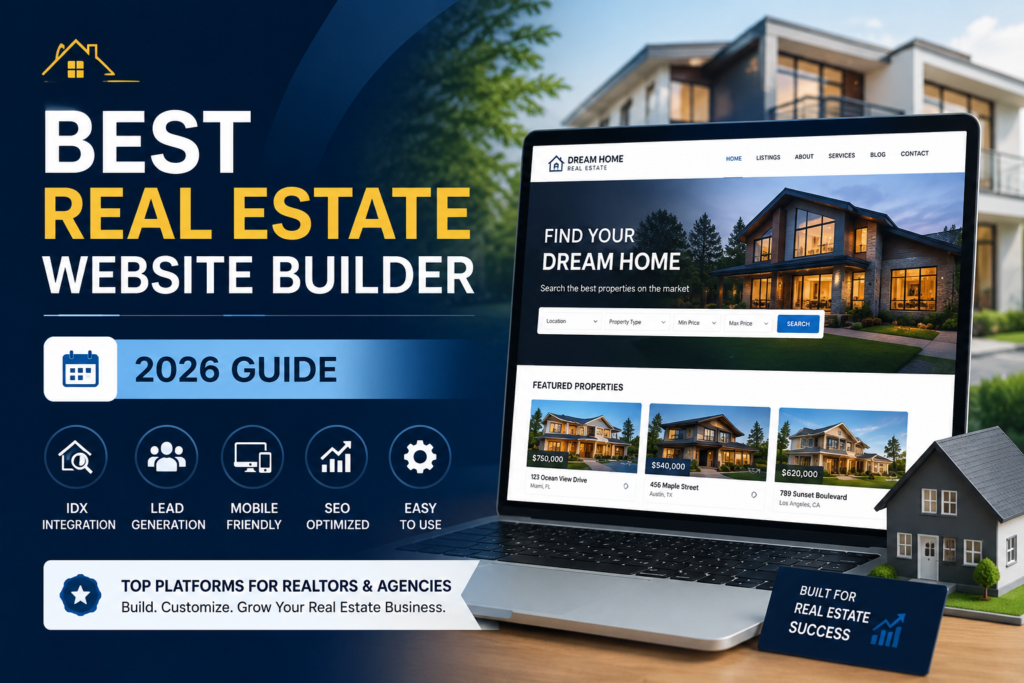
3. Real Estate Website Platform
Your website acts as your digital storefront. In 2026, having a mobile-friendly and SEO-optimized website is critical for generating organic traffic.
Important website features include:
- IDX property search integration
- Lead capture forms
- Neighborhood pages
- Blog functionality
- Property listings
- Mobile responsiveness
A professional website strengthens credibility while helping agents generate qualified leads around the clock.
4. Marketing Automation Tools
Real estate marketing tools allow professionals to automate campaigns across email, social media, and SMS channels.
Benefits include:
- Automated follow-up sequences
- Drip campaigns
- Social media scheduling
- Lead nurturing workflows
- Audience segmentation
Marketing automation ensures consistent engagement without requiring manual effort every day.
5. Transaction Management Software
Transaction management platforms help agents manage contracts, disclosures, signatures, and compliance requirements from one location.
Key advantages include:
- Paperless transactions
- Secure document storage
- Electronic signatures
- Compliance tracking
- Team collaboration
These tools significantly reduce administrative work and improve transaction efficiency.
6. Communication and Collaboration Tools
Effective communication is essential in real estate. Collaboration tools help agents stay connected with clients, teams, lenders, and vendors.
Important features include:
- Video conferencing
- Team messaging
- File sharing
- Appointment scheduling
- Client communication tracking
Strong communication systems improve responsiveness and enhance customer satisfaction.
7. Analytics and Reporting Platforms
Data-driven decisions can improve marketing performance and business growth.
Analytics tools help monitor:
- Website traffic
- Lead conversion rates
- Marketing ROI
- Sales performance
- Customer behavior
Tracking these metrics enables agents and brokers to identify opportunities and optimize strategies.

How to Build the Ideal Real Estate Tech Stack
When creating your real estate software stack, focus on integration and scalability rather than simply adding more tools.
Follow these steps:
Identify Business Needs
Evaluate your current workflow and determine where technology can eliminate bottlenecks.
Choose Integrated Solutions
Select platforms that connect seamlessly with your CRM and marketing systems.
Prioritize Automation
Automating repetitive tasks can save hours each week and improve lead response times.
Train Your Team
Technology only delivers results when team members know how to use it effectively.
Measure Performance
Regularly review software performance and ROI to ensure your tech stack supports business goals.
Future Trends in Real Estate Technology
The future of proptech solutions continues to evolve. In 2026 and beyond, real estate professionals can expect greater adoption of:
- Artificial Intelligence (AI)
- Predictive analytics
- Virtual property tours
- Smart CRM automation
- AI-powered lead scoring
- Advanced customer personalization
- Cloud-based collaboration platforms
Businesses that embrace these innovations early will be better positioned for long-term growth.
Final Thoughts
A strategic real estate tech stack is one of the most valuable investments agents and brokers can make in 2026. By combining CRM software, lead generation tools, marketing automation, transaction management platforms, and analytics solutions, real estate professionals can operate more efficiently while delivering superior client experiences.
The best real estate technology stack is not necessarily the most expensive—it is the one that aligns with your business goals, integrates seamlessly, and helps you generate more leads, close more transactions, and scale your operations successfully in the competitive US real estate market.